Apple Cider Vinegar for Weight Loss: The Honest Facts
Does apple cider vinegar help you lose weight?
Apple cider vinegar for weight loss offers a small, real nudge — the best study showed about one to two pounds over 12 weeks, likely from mild fullness and slower digestion, not fat-burning. Liquid vinegar is the version that was studied; ACV pills have weak evidence. Treat it as a minor helper alongside diet, not a solution.
- Liquid ACV shows modest satiety and digestive support; the studied dose is 1 to 2 tablespoons a day, diluted in water.
- ACV pills and gummies have weak-to-no evidence and vary widely in actual acetic acid content.
- The effect is small next to viscous fiber and berberine — a minor helper, not a fat-burner.
Apple cider vinegar for weight loss is one of those ideas that refuses to die. It shows up in every wellness feed, gets sworn by in the comments, and sells a whole shelf of gummies and capsules on the promise of melting fat while you sleep. So it is worth saying plainly, right at the top: apple cider vinegar can play a small, honest role in a weight-loss plan, but it is a minor helper and not the fat-burner the marketing makes it out to be. The distance between what the research actually shows and what the labels imply is enormous, and that gap is exactly where people waste money.
This article separates the two things that constantly get blended together — the liquid vinegar that has genuinely been studied, and the pills and gummies that mostly have not — and then puts the whole ingredient in perspective against the options that carry real evidence. The goal is not to talk you out of ACV. It is to tell you exactly how much to expect, so you can spend your effort and your money where they actually move the needle.
What apple cider vinegar actually does in the body
The active component people care about is acetic acid, the compound that gives vinegar its sharp smell and taste. When you take a measured amount with or before a meal, two mild effects have shown up consistently enough to be worth mentioning. The first is a modest slowing of how quickly the stomach empties, which can make a meal feel like it lasts a little longer and take a small edge off hunger between meals. The second is a gentle blunting of the blood-sugar spike after a carbohydrate-heavy meal, which some people find helps with the mid-afternoon energy crash that drives snacking.
Notice what is not on that list. There is no credible evidence that apple cider vinegar "burns fat," raises your metabolism in any meaningful way, or targets belly fat specifically. The honest description is that ACV can slightly change how a meal behaves in your body, which can slightly reduce how much you eat. That is a real mechanism, but it is a small one, and it sits entirely on top of your eating habits rather than overriding them. Vinegar cannot create a calorie deficit that your diet is not already producing.
The one honest study everyone cites
Almost every article claiming ACV works points back to the same source: a 12-week Japanese trial of roughly 175 adults who drank a daily vinegar drink or a placebo while otherwise eating normally. The group taking vinegar lost a bit more weight than the placebo group — on the order of one to two pounds over the full three months. That is the high-water mark of the evidence, and it is worth being clear-eyed about what it means.
One to two pounds over twelve weeks is a genuine result, not nothing, but it is small. It is the kind of effect that gets swamped by a single week of loose eating, and it came from a controlled study with a measured daily dose, not from a splash of vinegar on a salad twice a week. When you see ACV promising dramatic transformations, remember that the strongest study behind those claims produced a difference most people would struggle to see on the scale from week to week. It is a nudge, and it should be sold as a nudge.
Want appetite support with stronger evidence?
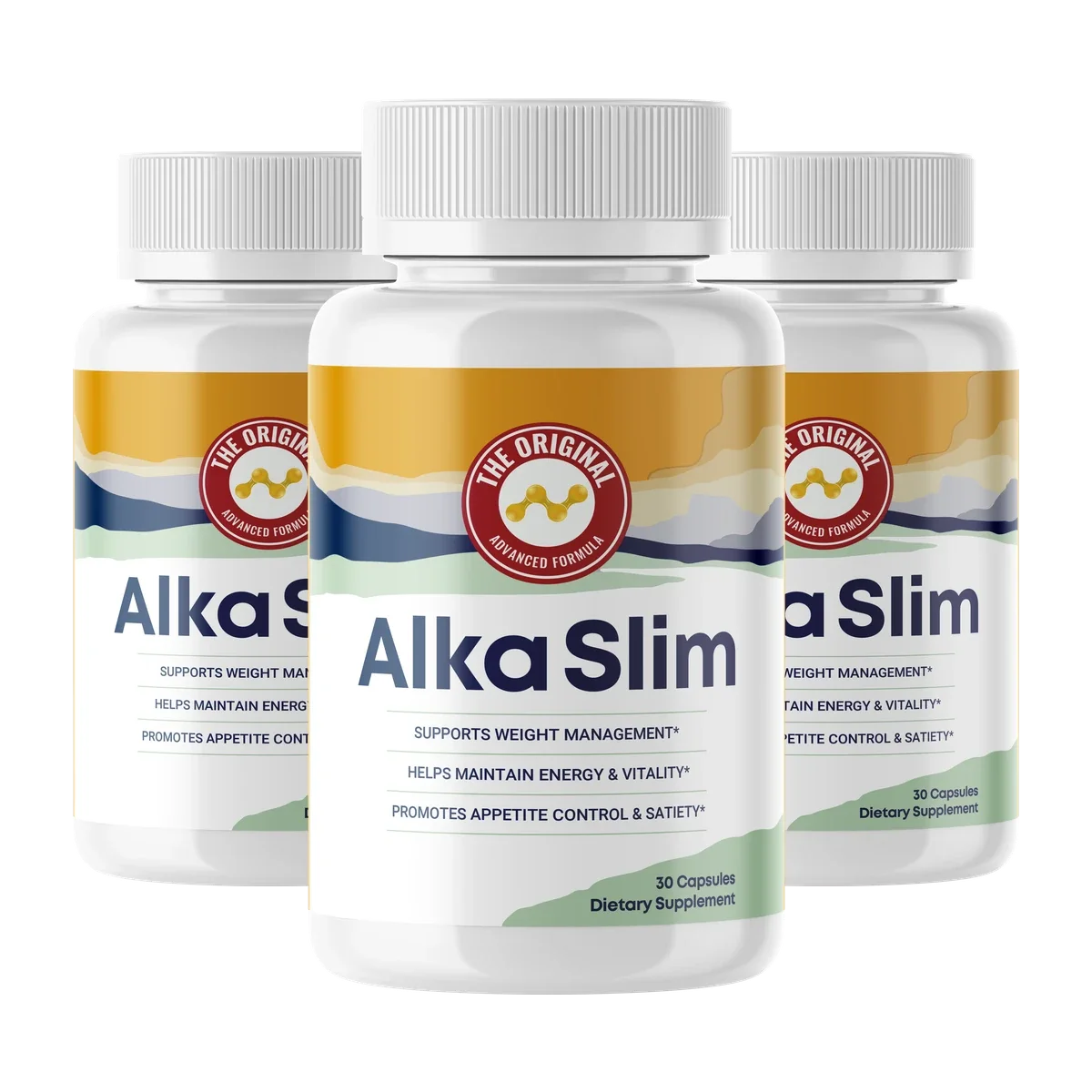
If you like the idea of gentle, natural help with hunger, AlkaSlim is a fiber-forward, once-daily formula taken with water before a meal — the mechanism that actually outperforms vinegar for satiety. See current pricing and the 60-day guarantee on the official store.
Check AlkaSlim on the Official StoreLiquid ACV vs ACV pills and gummies: the difference that matters
Here is the split that the supplement aisle desperately hopes you will not notice. Nearly all of the human research that shows any benefit used liquid vinegar at a measured dose. The pills, capsules and gummies that dominate the shelves are a different product, and the evidence does not automatically carry over to them.
The problem is standardization. A tablespoon of liquid vinegar contains a fairly predictable amount of acetic acid. A capsule or gummy does not have to. Independent testing over the years has repeatedly found ACV pills that contain far less acetic acid than their labels imply, and in some cases barely any at all. Gummies add a second problem: to taste good, many are loaded with added sugar, which quietly works against the very goal you bought them for. So the honest ranking is simple — if you want the modest effect the studies describe, the diluted liquid is the version that was actually tested, and the pills are mostly a convenience format riding on the liquid's reputation.
How much apple cider vinegar per day, and how to take it safely
If you want to try ACV, the dose used in the research is about one to two tablespoons — roughly 15 to 30 millilitres — per day. More is not better. The single most important rule is to dilute it in a large glass of water, and ideally take it with or just before a meal rather than on an empty stomach.
Dilution is not a nicety, it is a safety step. Vinegar is acidic enough to erode tooth enamel over time, and drinking it neat can irritate the throat, the esophagus and the stomach lining. The people who end up with problems from ACV are almost always the ones who took it undiluted or drank far more than the studied amount thinking it would speed things up. A few sensible habits cover it: always dilute, sip through a straw to keep the acid off your teeth, rinse your mouth with plain water afterward, and stop if it upsets your stomach. And because acetic acid can affect blood sugar and potassium, anyone on medication — particularly for diabetes or heart conditions — should clear it with a clinician first.
Three myths about apple cider vinegar and fat loss
Myth 1: it fires up your metabolism. This is the claim that sells the most bottles and has the least behind it. ACV's modest benefit comes from slightly slowing digestion and softening a blood-sugar spike, not from making your body burn more calories at rest. There is no "metabolism boost" in the human data worth the name, and treating vinegar as a thermogenic is how the marketing gets ahead of the science.
Myth 2: gummies work just as well as the drink. They are the most popular format and the weakest bet. Because gummies are poorly standardized on acetic acid and often carry added sugar, they sit even further from the studied liquid than plain capsules do. If ACV's small effect matters to you, the format that delivers it is the one that tastes the worst — the diluted liquid.
Myth 3: it works without changing your diet. Every result above came from studies where the vinegar was added to an ordinary diet, and the effect was still small. Nothing about acetic acid creates a calorie deficit on its own; at best it makes a deficit you are already running a touch easier to hold. If you are looking for a food-first way to actually curb appetite, our guide to natural appetite suppressant foods and supplements is a more productive place to start than a vinegar shot.
ACV vs the ingredients with stronger evidence
The most useful thing you can do with apple cider vinegar is put it in a lineup and see where it ranks, because it is far from the only "natural" option and it is nowhere near the strongest. Two ingredients consistently outperform it in the research, and both work through clearer mechanisms.
The first is viscous fiber, glucomannan from konjac root being the best-studied example. Taken with water before a meal, it forms a gel in the stomach that creates genuine fullness within about 30 to 60 minutes — a same-day effect you can feel, which ACV cannot reliably deliver. The second is berberine, an alkaloid that acts on blood sugar and metabolism, with pooled trials landing near an average of 2 kilograms of weight change. For a full side-by-side of those two mechanisms, our comparison of berberine for weight loss versus fiber lays out which fits which goal. Green tea catechins are a third option worth knowing, with a modest thermogenic effect that ACV is often wrongly credited with.
Set against that field, apple cider vinegar is a supporting actor. Its effect is smaller than fiber's fullness and smaller than berberine's average, it lacks the standardized, once-daily convenience of a proper capsule, and its main practical risk — enamel and stomach irritation — is one the others do not carry. None of that makes ACV useless. It simply means that if you are going to invest in one ingredient, the evidence points you toward fiber or berberine first, with vinegar as an optional extra rather than the centerpiece.
Where apple cider vinegar fits, honestly
Reduce it to a sentence: apple cider vinegar is a minor, real helper, not a fat-burner. If you enjoy a diluted tablespoon in water before a meal and it takes a small edge off your appetite, that is a perfectly reasonable habit and the downside is low as long as you dilute it and stay near the studied dose. What it will not do is carry a weight-loss plan on its own, replace a calorie deficit, or match the ingredients built specifically for appetite and metabolism.
If the part of ACV that appeals to you is the promise of gentle, natural help with hunger, the smarter move is to get that effect from the mechanism that actually delivers it. A fiber-forward, once-daily formula like AlkaSlim is designed around exactly the satiety route ACV only gestures at — a measured dose, taken with water before a meal, that creates real fullness rather than a small, unpredictable nudge. Vinegar can stay in your kitchen. For the job of eating less without fighting yourself, reach for the ingredient with the stronger case.

Skip the vinegar shots, keep the satiety
AlkaSlim delivers the fullness effect ACV only hints at, in a standardized once-daily dose backed by a 60-day money-back guarantee — so you can judge it on your own results, not on hype.
Order AlkaSlim From the Official StoreFrequently asked questions
Does apple cider vinegar help you lose weight?
Modestly, and only as a minor helper. The best human study on apple cider vinegar for weight loss found a difference of roughly one to two pounds over 12 weeks when a daily dose was added to an otherwise ordinary diet. The likely mechanism is a small nudge to fullness and slower stomach emptying, not fat-burning. It is real but small, and it does nothing without a calorie deficit behind it.
Do ACV pills actually work?
The evidence for ACV pills is weak to non-existent. Almost all of the human research used liquid vinegar at a measured dose, not capsules. Pills vary widely in how much acetic acid they actually contain, some contain very little, and few have been tested in trials at all. If you want the modest effect the studies describe, diluted liquid vinegar is the version that was actually studied.
How much apple cider vinegar per day?
The studied dose is about one to two tablespoons (15 to 30 ml) a day, always diluted in a large glass of water and ideally taken with a meal. More is not better and can harm tooth enamel and irritate the throat and stomach. Drinking it undiluted is the main way people get into trouble, so dilution is not optional.
Is ACV or berberine better for weight loss?
Berberine has the stronger evidence of the two — pooled trials put its average weight change near 2 kg, while apple cider vinegar's effect is smaller and rests on fewer studies. Neither is a fat-burner, and berberine carries medication interactions that ACV does not. For gentle appetite support, viscous fiber outperforms both. Match the ingredient to your goal rather than the hype.