GLP-1 Supplements: Do They Really Work?
What are GLP-1 supplements and do they work?
GLP-1 supplements are over-the-counter pills marketed as boosting or mimicking GLP-1, the appetite hormone drugs like Ozempic target. The honest verdict is modest metabolic support at best — no supplement is proven to reproduce a GLP-1 drug's effect in humans. Their real-world help is a few pounds over weeks alongside a calorie deficit, not the injection's double-digit percentages.
- No supplement is proven to mimic GLP-1 in humans; "boosts GLP-1" on a label is marketing, not a proven claim.
- The realistic levers are indirect: fiber for fullness and craving control, berberine for metabolic support.
- Judge the actual ingredients and doses inside the bottle, not the GLP-1 buzzword on the front.
The phrase GLP-1 supplements barely existed a couple of years ago, and now it is one of the fastest-growing searches in the weight category. The reason is obvious: GLP-1 drugs made the hormone famous, and the supplement industry moved fast to put those three letters on bottles. But "GLP-1 support" on a label is not a regulated promise, and it tells you almost nothing about whether the product inside will do anything. So the useful question is not whether GLP-1 supplements exist — they clearly do — but whether they actually work, and for whom.
This is a plain-English explainer that separates the hype from the evidence. We will cover what these products claim, what your body's GLP-1 actually responds to, which ingredients have real data, and how to shop without paying a premium for a buzzword. The short version is that a couple of honest levers exist — and they are not the ones the flashiest marketing leans on.
What GLP-1 supplements claim to do
GLP-1, glucagon-like peptide-1, is a hormone your gut releases after you eat. It helps signal fullness and slows how fast your stomach empties, which is why medicines that mimic it are so effective at reducing appetite. GLP-1 supplements borrow that story. They typically claim to either "boost your natural GLP-1" or to "support GLP-1 pathways," usually with a blend of fiber, plant extracts, amino acids, and sometimes berberine.
The claims sound scientific, and they lean on a real hormone, which is what makes them persuasive. But there is a wide gap between "this ingredient interacts with a system that involves GLP-1 in a lab" and "this capsule raises your GLP-1 enough to lose weight." The marketing lives in that gap. Your job as a shopper is to notice when a label is describing a mechanism it hopes is true rather than a result that has been measured in people.
Can a supplement actually boost GLP-1? The evidence
Here is the honest state of play. Your body genuinely does release more GLP-1 in response to certain foods — protein and fermentable fibers are the clearest examples — so diet really does nudge the hormone. That part is real physiology, not marketing. Where the evidence thins out is the leap to a pill: there is no convincing human data that a capsule raises GLP-1 enough, on its own, to drive meaningful weight loss the way the drugs do.
So no supplement is proven to mimic GLP-1 in humans. What the better ingredients actually do is work indirectly — fiber slows digestion and physically increases fullness, which supports appetite control whether or not it moves the hormone number much. That is a real benefit, but notice the framing has changed: you are no longer buying a GLP-1 effect, you are buying a fiber effect that happens to overlap with the outcome people want. Once you see that, the whole category gets easier to judge. For the wider field of what does hold up, our roundup of the evidence-ranked natural Ozempic alternatives is the companion to this explainer.
Want the fiber lever without the buzzword?
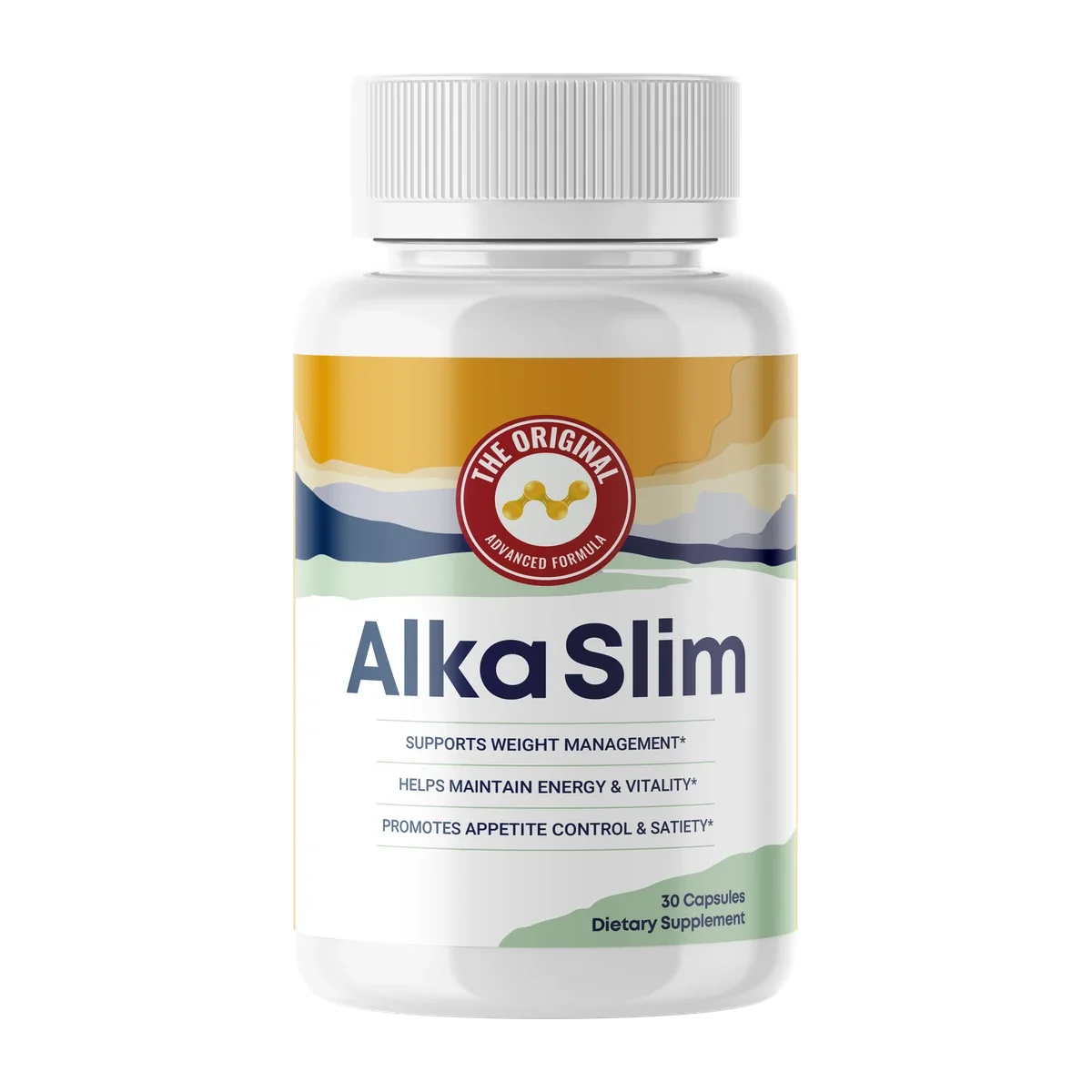
AlkaSlim is a fiber-forward, once-daily appetite formula — the realistic mechanism behind most "GLP-1 support" marketing — taken with water before a meal. See current pricing and the 60-day guarantee on the official store.
Check AlkaSlim on the Official StoreThe realistic levers: fiber and berberine
Strip the buzzword away and two ingredients do the honest work behind most credible "GLP-1 support" products. The first is viscous fiber — konjac glucomannan is the best-studied — which forms a gel in the stomach, slows emptying, and produces earlier, longer fullness you can feel within about half an hour to an hour. That is the most direct, most reliable appetite lever available without a prescription, and it is exactly the food-like mechanism that nudges satiety. For the mechanics, see the way konjac glucomannan fiber curbs appetite.
The second is berberine, which works on metabolism through the AMPK pathway rather than on fullness, averaging roughly 2 to 3 kilograms over 12 weeks in trials. It is the craving-and-blood-sugar lever rather than the stomach-fullness one. The two are often confused, so it is worth understanding how berberine and viscous fiber compare head to head before you decide which "GLP-1 supplement" is actually solving your problem. In almost every honest case, the product's value comes down to one of these two ingredients at a real dose — not the GLP-1 label wrapped around it.
Three myths about GLP-1 supplements, cleared up
Myth 1: "GLP-1 support" means it works like the drug. It does not. The phrase is unregulated and usually describes a hoped-for mechanism, not a measured result. A drug that mimics GLP-1 and a pill that "supports" it are not the same category, and the effect sizes are not close.
Myth 2: more trendy ingredients means a stronger effect. The opposite is often true. A long list of fashionable extracts at tiny doses is a classic sign of a formula built for the label rather than the result. One ingredient at its studied dose beats ten at pixie-dust amounts.
Myth 3: it works without changing how you eat. Even the honest levers — fiber and berberine — were studied in people who were also eating in a deficit. No GLP-1 supplement creates a calorie deficit for you; it can only make one a little easier to keep. Take the pill and change nothing else, and you should expect very little.
How to shop for one without getting burned
Ignore the front of the bottle and read the supplement facts panel. Look for a named, dosed ingredient with real human evidence — viscous fiber at a dose that approaches the studied few grams a day, or standardised berberine — rather than a "proprietary GLP-1 blend" that hides how little of anything you are getting. Proprietary blends are the biggest red flag in the category precisely because they let a product imply a big dose while delivering a small one.
Then set your expectations to match the mechanism. If the real driver is fiber, expect appetite help you feel the same day and a few pounds of easier consistency over weeks. If it is berberine, expect a slow metabolic effect that shows up over a couple of months. And check for the basics of a trustworthy seller: a clear label, a money-back guarantee, and honest language that does not promise drug-sized results. A product that talks in single-digit-pound support is being straight with you; one that whispers "Ozempic in a capsule" is not.
What your diet does that no GLP-1 pill can
There is an irony worth sitting with before you spend a cent on a "GLP-1 supplement": the most reliable way to raise your own GLP-1 is not a capsule at all, it is what ends up on your plate. Protein at each meal and fermentable, viscous fiber from whole foods both prompt a stronger, longer-lasting release of the hormone your body already makes — for free, with none of the label guesswork. A supplement can support that pattern, but it cannot outrun a diet built on refined carbohydrates and skipped protein. If a bottle is doing the heavy lifting and the meals behind it have not changed, the math simply will not add up.
This is also why the honest supplements in the category are the ones that behave like food rather than like a drug. Viscous fiber works because it mimics the slow, bulky, fullness-producing effect of a fiber-rich meal; it is not a shortcut around eating well, it is a way to make eating well a little easier to sustain when willpower is thin. Read the whole "GLP-1 support" trend through that lens and it stops being confusing: the products that help are the ones nudging the same levers your kitchen already controls, and the ones that disappoint are the ones selling the hormone's reputation without doing anything your dinner could not do better.
Where AlkaSlim fits — and where it does not pretend to
To be completely straight: AlkaSlim is not marketed as a GLP-1 pill and makes no claim to mimic the hormone. Its four named ingredients are baobab fiber, konjac glucomannan, L-arabinose and spermidine. The viscous fiber in it is exactly the realistic lever this article keeps pointing to — it slows digestion and increases fullness, the food-like, indirect way fiber supports appetite — while L-arabinose adds a sugar-digestion angle. That is the honest mechanism, described honestly.
So if you came here hoping to find a capsule that reproduces a GLP-1 drug, no supplement — AlkaSlim included — can promise you that, and anything that does is overstating its case. But if what you actually want is the genuine benefit hiding under the "GLP-1 support" marketing — reliable, fiber-based fullness in a simple once-daily habit — that is precisely what a fiber-forward formula is built to deliver. Set expectations at steady daily support alongside a better way of eating, and it can earn its place; expect the injection, and nothing on the shelf will satisfy you.

Buy the ingredient, not the buzzword
If honest fiber-based appetite support fits your plan better than chasing a GLP-1 label, AlkaSlim ships with a 60-day money-back guarantee so you can judge it on your own results.
Order AlkaSlim From the Official StoreFrequently asked questions
What are GLP-1 supplements and do they work?
GLP-1 supplements are over-the-counter pills marketed as boosting or mimicking GLP-1, the appetite hormone that drugs like Ozempic target. The honest verdict is that they offer modest metabolic support at best. No supplement is proven to reproduce a GLP-1 drug's effect in humans, and their real-world help is measured in a few pounds over weeks alongside a calorie deficit — not the double-digit percentages the injections can reach. Useful as everyday support, not as a drug replacement.
Can a supplement boost GLP-1 naturally?
Your body does release more GLP-1 after eating certain foods, particularly protein and fermentable fiber, so diet genuinely nudges the hormone. But there is no convincing human evidence that a capsule raises GLP-1 enough to drive meaningful weight loss on its own. The realistic mechanism is indirect: fiber slows digestion and increases fullness, which supports appetite control whether or not it moves the hormone much. Treat "boosts GLP-1" on a label as marketing, not a proven claim.
Are GLP-1 support pills worth buying?
It depends entirely on what is inside and what you expect. A product whose value rests on the phrase "GLP-1 support" but is dosed with pixie-dust amounts of trendy extracts is not worth it. A product built on a real dose of viscous fiber or standardised berberine can be worth it as modest daily support — but you are buying the fiber or the berberine, not the GLP-1 branding. Judge the ingredients and doses, ignore the buzzword.
Does AlkaSlim have GLP-1 support ingredients?
AlkaSlim is not marketed as a GLP-1 pill and makes no claim to mimic the hormone. Its four named ingredients are baobab fiber, konjac glucomannan, L-arabinose and spermidine. The viscous fiber in it is the realistic appetite lever — it slows digestion and increases fullness, which is the indirect, food-like way fiber supports appetite. If you want honest fiber-based support rather than a GLP-1 buzzword, that is what AlkaSlim offers; if you need a GLP-1 drug's effect, that requires a prescription.