L-Arabinose and Table Sugar: What Blocking Sucrase Does
The short version
L-arabinose is a plant sugar that slows sucrase, the enzyme in the small intestine that splits table sugar into glucose and fructose. Some of the sucrose in a meal then passes undigested instead of being absorbed. The action is specific to sucrose, and human work doses L-arabinose relative to the sucrose in the meal rather than as a fixed amount.
- Sucrase-isomaltase sits on the brush border of the small intestine and splits sucrose before it can be absorbed. L-arabinose competes with sucrose for it.
- The effect applies to table sugar only. Starch, lactose and fat are digested by other enzymes and are untouched by this mechanism.
- The published work expresses the useful amount as a proportion of the sucrose eaten, so a product that publishes neither a milligram figure nor a meal context cannot be compared to it.
Start with the enzyme, not the ingredient
Table sugar is sucrose, a disaccharide: one glucose joined to one fructose. Your body cannot absorb it in that form. Absorption happens across the wall of the small intestine and it happens one simple sugar at a time, so the bond has to be cut first.
The cutting is done by sucrase-isomaltase, an enzyme anchored in the brush border — the dense carpet of microvilli lining the small intestine. Sucrose arrives, meets the enzyme, and is split into glucose and fructose, which are then transported across the wall and into the blood. That is the entire pathway, and it is fast: the reason a sugary drink raises blood glucose so quickly is that there is almost nothing standing between the sugar and the bloodstream. (see The effects of L-arabinose on intestinal sucrase activity: dose-response studies in vitro and in humans, The American journal of clinical nutrition 2011)
How L-arabinose interferes
L-arabinose is a pentose — a five-carbon sugar — found in plant cell walls, in beet and corn fibre among other sources. Its interesting property is that it is a competitive inhibitor of sucrase. It occupies the enzyme without being usefully processed by it, so while it is bound, that enzyme molecule is not splitting sucrose. Other plant fibres in the same formula, such as baobab fibre, work by an entirely different route.
The word competitive is the important one, and it is the reason this article keeps returning to quantities. A competitive inhibitor does not switch an enzyme off. It competes with the normal substrate for the same site, so the degree of inhibition depends on the ratio between the two. Plenty of inhibitor against a small amount of sucrose means substantial inhibition. A trace of inhibitor against a dessert means almost none.
It only touches one kind of sugar
This is the point most marketing copy blurs, and it is worth being precise about. Sucrase digests sucrose. It does not digest:
- Starch — broken down first by salivary and pancreatic amylase, then finished at the brush border by maltase-glucoamylase and the isomaltase half of the same complex. Bread, rice, potatoes and pasta are largely untouched by a sucrase inhibitor.
- Lactose — handled by lactase, a different brush-border enzyme entirely.
- Fat — handled by lipases, an entirely different system.
- Free glucose and fructose — already monosaccharides. There is nothing left to split, so honey, most fruit sugars and high-fructose corn syrup are largely outside this mechanism.
So the honest description of what an L-arabinose ingredient does is narrow: it may reduce how much of the table sugar in a meal gets absorbed. On a low-sucrose meal it has very little to do. Narrow mechanisms are the rule rather than the exception across diet supplements for weight loss.
The dose is a ratio, not a number
Because the mechanism is competitive, the human work in this area does not report a single daily milligram figure the way a vitamin trial would. It reports the inhibitor as a proportion of the sucrose load in the test meal — a small percentage of the sugar eaten. That design makes sense biochemically and it is the right way to study a competitive inhibitor.
It also has an awkward consequence for anyone reading a supplement label. To know whether a product delivers a comparable exposure, you need two numbers: how much L-arabinose is in a serving, and roughly how much sucrose is in the meal you take it with. The second one is yours to estimate. The first one has to come from the manufacturer. Compare that with konjac glucomannan, where the trials do report a daily gram figure you can hold a label against.
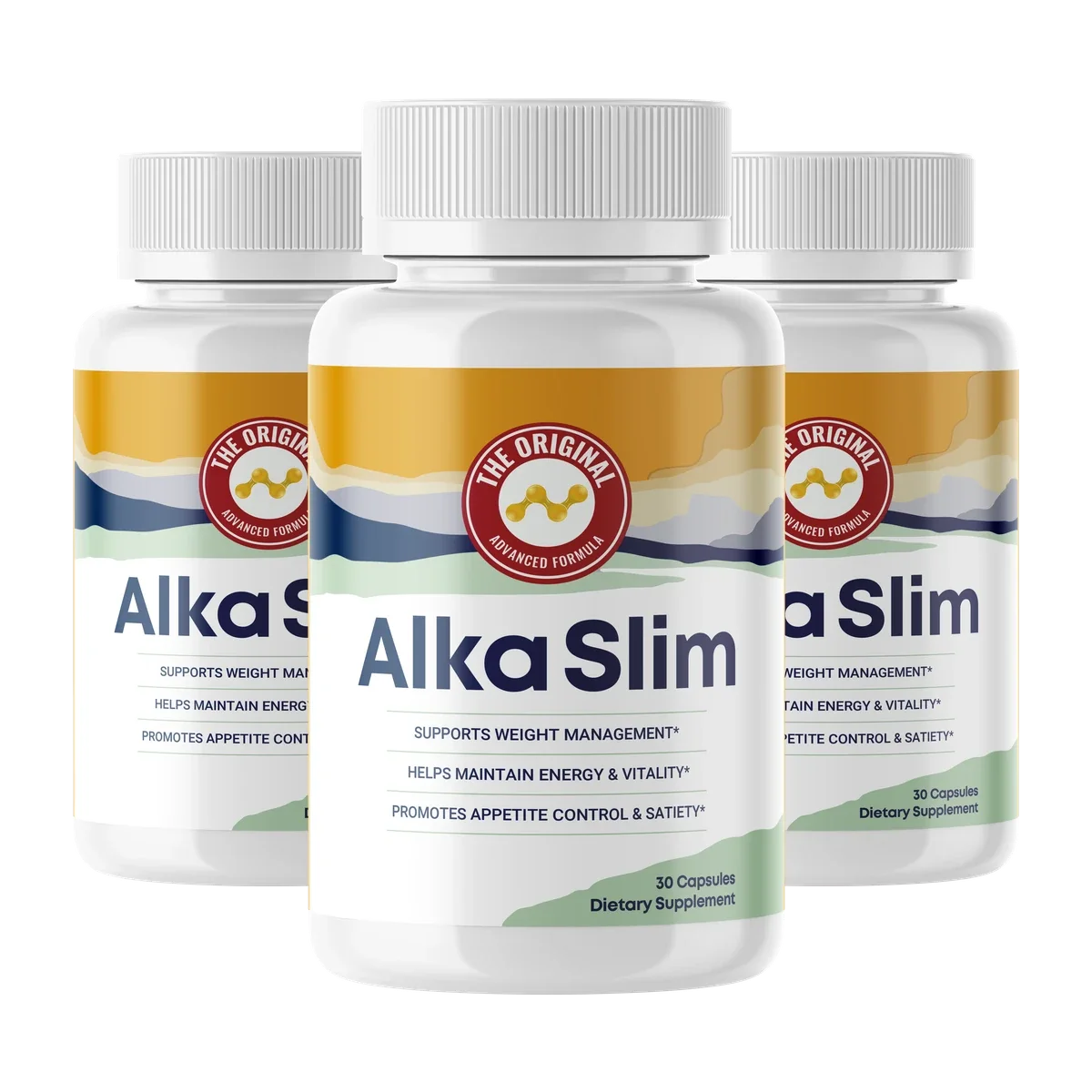
AlkaSlim's sales page names L-Arabinose as the second of four ingredients and publishes no amount for it, no Supplement Facts panel, and no figure anywhere in the configuration file that generates the page. So the first number does not exist in public, and the comparison cannot be made — not by us, not by you, not by anyone outside the company. (see NIH Office of Dietary Supplements, Dietary Supplements for Weight Loss)
What happens to the sugar that is not split
Sucrose that escapes digestion in the small intestine does not vanish. It continues into the colon, where the resident bacteria ferment it, producing gas and short-chain fatty acids. This is the ordinary and predictable side effect of every carbohydrate-blocking approach, and it is dose-related in both directions: more inhibitor, or more sugar, means more unabsorbed sucrose reaching the colon and more bloating, wind and looseness.
It is also, in a backhanded way, the most reliable signal a product of this type gives you. A sucrase inhibitor present in a meaningful amount, taken before a genuinely sugary meal, tends to make itself known.
What this means for AlkaSlim specifically
Nothing above is a claim about AlkaSlim. It is a description of what the ingredient does in general, and it is offered here so that you can evaluate the product on the same terms a researcher would. On the product itself, three facts are worth holding together:
- The manufacturer names four ingredients and publishes an amount for none of them.
- There is no Supplement Facts panel on the sales page, and none is visible on any of the three bottle photographs.
- The structured data embedded in that same sales page lists six ingredients that do not appear in its visible copy — so the ingredient list itself is not settled, never mind the amounts.
The mechanism described in this article is real. Whether this bottle engages it at all is a question the seller has not answered in public.
How to test the claim yourself
Ask the store two questions by email before you order: send me the Supplement Facts panel, and tell me how many milligrams of L-arabinose are in one capsule. Both have one-line answers if the company knows its own product. If neither answer arrives, that is information too — and it is cheaper to learn it before a six-bottle order than after one.
If you manage blood glucose with medication, do not experiment with anything that changes carbohydrate absorption without talking to whoever manages that medication first. And if you do buy, read the guarantee terms carefully: the manufacturer's stated refund process requires all products, including empty bottles, to be returned within 60 days of the original purchase.
Where AlkaSlim sits
L-arabinose is the second of four ingredients AlkaSlim names. Like the other three, it is listed without an amount.
Order NowFrequently asked questions
Does L-arabinose block all carbohydrates?
No. It acts on sucrase, which digests sucrose — ordinary table sugar. Starch is broken down by amylase and then by maltase-isomaltase, lactose by lactase, and fat by lipases. None of those is affected.
How much L-arabinose is needed?
The human work expresses it as a proportion of the sucrose in the meal rather than as a standalone milligram figure, because the mechanism is competitive: what matters is how much inhibitor is present relative to how much sugar. That makes a product with no published amount impossible to compare.
Why would undigested sugar cause bloating?
Sucrose that is not split at the brush border is not absorbed. It travels on to the colon, where gut bacteria ferment it and produce gas. This is the predictable, dose-related side effect of every carbohydrate-blocking approach, and it is worse the more sugar you eat with it.
Is any of this a treatment for a blood sugar condition?
No, and nothing on this site should be read that way. Dietary supplements are not intended to diagnose, treat, cure or prevent any disease. If you manage blood glucose with medication, anything that changes carbohydrate absorption is a conversation to have with your clinician before you start, not after.
What is L-arabinose in AlkaSlim used for?
L-arabinose competes with sucrose for the enzyme sucrase, so some table sugar from a meal is not absorbed. It works on sucrose only, and its dose is judged against the sucrose in the meal.
References
- PubMed — The effects of L-arabinose on intestinal sucrase activity: dose-response studies in vitro and in humans (The American journal of clinical nutrition, 2011)
- MedlinePlus Genetics — sucrase-isomaltase and sucrose digestion
- NIH Office of Dietary Supplements — dietary supplements for weight loss
- FTC — health products compliance guidance