Over the Counter vs Prescription Weight Loss Pills
Are over the counter weight loss pills or prescription drugs better?
Over the counter weight loss pills and prescription drugs suit different goals. Prescription GLP-1 drugs can drive 10 to 15 percent or more body-weight loss but need a doctor, cost more and carry stronger side effects. OTC options, especially fiber, offer modest support at low risk with no script.
- Prescription route: biggest results, highest cost, needs medical supervision and monitoring.
- OTC route: modest results, low cost, no script, but not FDA pre-approved so quality varies.
- Fiber is the lowest-risk OTC starting point and pairs with a diet change rather than replacing one.
Walk into any pharmacy in January and you face the same fork in the road: a shelf of over the counter weight loss pills on one side, and a doctor's appointment for a prescription drug on the other. One promises convenience and a low price. The other promises bigger numbers on the scale, but comes with a waiting room, a co-pay, and a conversation about your medical history. Neither is automatically the right call, and the marketing on both sides is happy to keep it that way. (see STEP 1 trial, New England Journal of Medicine 2021)
This guide lays the two routes side by side on the things that actually decide it: how much weight each one realistically moves, what it costs, who can get it, and what it asks of your body. The goal is not to crown a winner. It is to hand you a clear way to match the option to your own situation, so you spend money on the thing that fits rather than the thing that shouts loudest.
What over the counter weight loss pills actually are
The phrase covers a wide, uneven category. It includes dietary supplements built around fiber, plant extracts, and metabolic ingredients; it includes older stimulant-based fat burners; and it includes a small number of pills sold in pharmacies without a prescription. What unites them is the access point: you can buy them off the shelf or online without a doctor's sign-off. That convenience is the headline benefit, and it is a real one for anyone who does not want, or does not qualify for, a medical program. (see FDA, Questions and Answers on Dietary Supplements)
The catch sits behind the same convenience. Dietary supplements are not pre-approved by the FDA for safety or effectiveness before they go on sale, the way a prescription drug is. The manufacturer is responsible for standing behind its own claims, and the agency mostly steps in after the fact. That does not make supplements dangerous by default, but it does shift the work of choosing wisely onto you. The realistic expectation for a well-formulated over the counter product is modest support, typically single-digit pounds over a cycle, layered on top of a diet change, rather than a transformation on its own. If you want a broader look at how to separate the credible options from the noise, our guide to the best weight loss pills of 2026, ranked by evidence is a good companion to this one.
Prescription weight loss drugs: the heavyweight option
On the other side sit the prescription medications, and this is where the biggest numbers live. The GLP-1 class in particular has changed the conversation. In clinical trials, these drugs can drive weight loss in the range of 10 to 15 percent of body weight or more, an order of magnitude beyond what any supplement produces. If your goal is a large, medically meaningful reduction and you have a body-mass index or health picture that qualifies you, nothing on the OTC shelf competes on raw magnitude. That is simply the honest ceiling of the two categories.
But the power comes attached to strings. These drugs require a prescribing clinician, which means an evaluation and, usually, ongoing monitoring. They carry a stronger side-effect profile than a fiber capsule, most commonly nausea and other digestive effects, and they are not appropriate for everyone. They also cost real money, which we come back to below. The prescription route is best understood as a medical treatment with medical oversight, not a purchase, and that framing is the single most useful thing to keep in mind when you compare it to a supplement.
Want to start with the low-risk option?
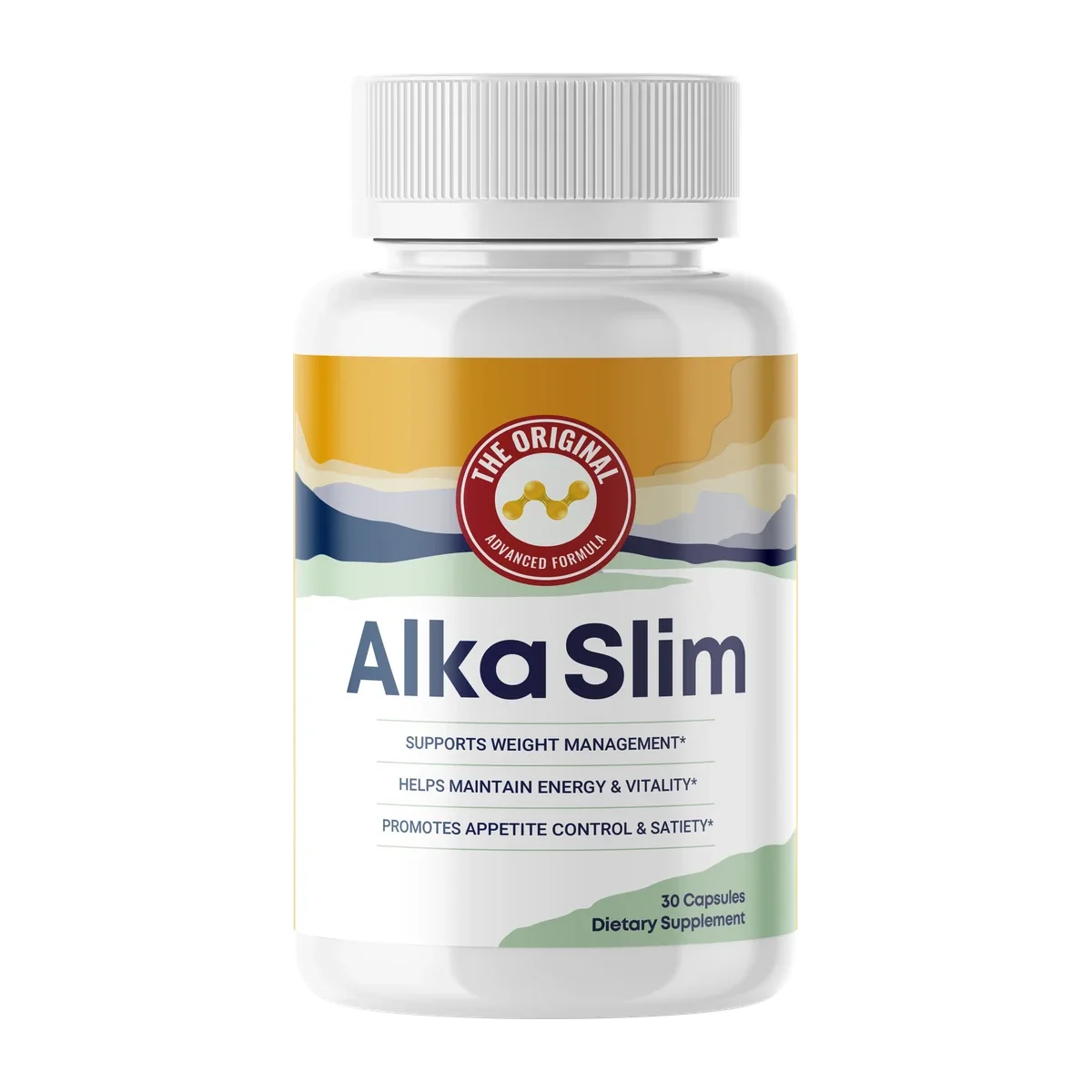
AlkaSlim is a fiber-forward, once-daily appetite formula taken with water before a meal — the no-prescription, gentle end of this comparison. See current pricing and the 60-day money-back guarantee on the official store.
Check AlkaSlim on the Official StoreThe honest numbers: how much weight each moves
Set expectations before you spend, because mismatched expectations are how people waste money on both sides. A prescription GLP-1 can realistically move double-digit percentages of body weight over a full course of treatment. An over the counter supplement, even a good one, is playing a different game: think modest, single-digit pounds of extra help across a cycle, and only when it sits on top of a real change in how you eat. Viscous fiber, one of the better-studied OTC ingredients, averages roughly a couple of pounds of difference in trials, delivered mainly through appetite control rather than metabolism.
Read that gap the right way. It does not mean the supplement is worthless; it means the two tools are sized for different jobs. A person who needs to lose forty pounds for a medical reason and a person who wants to take the edge off evening hunger while they clean up their diet are not shopping for the same product. The number that matters is not the biggest one on offer, but the one that matches the result you actually need.
Cost, access and the fine print
Money is often the quiet deciding factor. Prescription GLP-1 medications commonly run from several hundred to well over a thousand dollars a month without insurance, and coverage for weight loss specifically is inconsistent from plan to plan. On top of the drug itself there is the appointment, any lab work, and follow-up visits. Over the counter supplements typically cost a fraction of that per month and skip the clinical overhead entirely. For a lot of people, that difference is not a footnote; it is the whole decision.
Access cuts the same way. The prescription route has a gate: you have to qualify, get seen, and stay in the system. The OTC route has none, which is both its strength and its weakness. You can start today, but you also carry the full responsibility for picking a reputable product, because nothing checked it for you before it reached the shelf. That is why reading the label, the dose, and the return policy matters more with a supplement than with a prescription a clinician chose for you.
Three objections worth answering honestly
"Isn't a supplement just a weak version of the drug?" No, and thinking of it that way leads you wrong. They are different categories, not different strengths of the same thing. A GLP-1 works on appetite hormones under medical supervision; a fiber supplement works mechanically in the stomach. One is not a diluted form of the other, so judging the supplement against the drug's scale guarantees disappointment. Judge it against its own job: gentle, low-risk appetite support.
"If OTC pills aren't FDA pre-approved, are they a scam?" Not inherently. "Not pre-approved" describes the regulatory pathway for all dietary supplements, not a verdict on any one product. The honest read is that the category demands more scrutiny from the buyer, not that the whole category is fraudulent. The way to protect yourself is to favor products with transparent labels, sensible doses, a real money-back guarantee, and ingredients with published evidence behind them. (see NIH Office of Dietary Supplements, Dietary Supplements for Weight Loss)
"Can I skip the doctor entirely and just buy something?" For a low-risk fiber product, generally yes, but with a caveat: if you take medication, are pregnant or nursing, or manage a health condition, a quick conversation with a clinician is still the smart move. The absence of a prescription requirement is a convenience, not a reason to skip the one safety check that costs you nothing. Our overview of what makes a weight loss supplement actually work walks through the same due-diligence checklist in more detail.
Where fiber fits: a low-risk starting point
If you are weighing the two routes and leaning toward starting small, viscous fiber is the most defensible entry point on the OTC side. It works by a simple mechanism: taken with water before a meal, it forms a gel in the stomach that slows emptying and creates earlier, longer fullness, so you tend to eat somewhat less without fighting your appetite. There is no metabolic interaction to manage and no prescription to chase. The trade-off is honesty about scale: fiber offers modest help, not a transformation, and it only counts when it rides on top of a genuine diet change.
This is the lane a fiber-forward formula like AlkaSlim is designed for. It is a once-daily capsule taken with a full glass of water before a meal, aimed at the appetite-control side of the equation rather than the metabolic one. It is not a substitute for a prescribed medication, and it should not be sold to you as one; it is the low-cost, low-risk starting point for someone who wants to try the gentle route before deciding whether a medical program is worth pursuing. If you are specifically comparing metabolic ingredients, our breakdown of berberine versus fiber for weight loss covers how those two OTC options differ.
So which one should you pick?
Reduce it to three questions. First, your goal: if you need a large, medically meaningful reduction and you qualify, the prescription route is built for that and nothing OTC matches it on magnitude. If you want modest, everyday appetite support, the supplement shelf is the right neighborhood. Second, your budget: a monthly GLP-1 bill dwarfs a monthly supplement, and for many people that alone settles it. Third, your medical status: medication, pregnancy, nursing, or a health condition all push you toward a clinician's input regardless of which route you choose.
Most people are not choosing between extremes so much as choosing where to start. Beginning with a low-risk fiber supplement while you clean up your eating, and keeping the prescription route in your back pocket if the goal turns out to need it, is a perfectly rational sequence. The mistake is not picking the "wrong" category. The mistake is expecting a supplement to behave like a drug, or paying for a drug when a gentler tool would have matched your goal. Match the tool to the job, and either route can be the right one.

Ready to try the no-prescription route?
If a low-cost, low-risk fiber supplement fits your goal better than a medical program right now, AlkaSlim ships with a 60-day money-back guarantee so you can judge it on your own results.
Order AlkaSlim From the Official StoreFrequently asked questions
Are prescription weight loss pills better than OTC?
Better at one thing: raw weight loss. Prescription GLP-1 drugs can drive 10 to 15 percent or more of body weight off in trials, far beyond what any supplement does. But better on that single number does not make them the right choice for everyone. They need a doctor, cost far more, and carry stronger side effects. For someone who wants low-risk, low-cost, single-digit-pound support, an over the counter option can be the more sensible starting point.
Do I need a prescription for weight loss pills?
Only for the medications. GLP-1 drugs and other prescription weight loss medicines require a doctor's evaluation, a prescription, and often ongoing monitoring. Over the counter weight loss pills and dietary supplements, including fiber products, need no script and can be bought directly. That accessibility is a genuine advantage, but it also means these products are not pre-approved by the FDA the way a prescription drug is, so the burden of choosing wisely falls on you.
How much do prescription weight loss meds cost?
Prescription GLP-1 medications commonly run several hundred to well over a thousand dollars a month without insurance coverage, and coverage for weight loss specifically is inconsistent. There are also the costs around the drug: the appointment, any lab work, and follow-up visits. Over the counter supplements typically cost a fraction of that per month, which is a large part of why many people start there while they decide whether a medical route is worth pursuing.
Can OTC supplements replace prescription drugs?
Not as an equivalent. A supplement and a GLP-1 drug are not the same class, mechanism, or magnitude, and treating one as a stand-in for the other sets up disappointment. What an over the counter supplement can do is offer a lower-risk, lower-cost form of support, such as fiber-driven appetite control, for people who are not candidates for medication, cannot afford it, or want to try a gentler route first. It complements sensible eating rather than replacing a prescribed treatment.
Are OTC weight loss pills lower risk than prescription ones?
OTC options, especially fiber, are low risk and need no script. Prescription GLP-1 drugs do more but carry stronger side effects and need medical supervision.